

Vitamin C in Skincare: Which one to choose and how to use It

Vitamin C in Skincare: Which One to Choose and How to Use It
There are plenty of vitamin C skincare products: serums, toners, creams, and even pads. The ingredient itself is well known, but questions remain. Which form should you choose? Is it suitable for sensitive skin? When should you apply it, and can you combine it with other active ingredients?
A good place to start is the form of vitamin C and the product’s overall formulation. Pure ascorbic acid and its derivatives differ, so seeing “vitamin C” on two packages does not mean the products will provide the same type of care.
Let’s look at five products and see how to incorporate them into your usual routine.
Transparent Lab Ascorbic C15
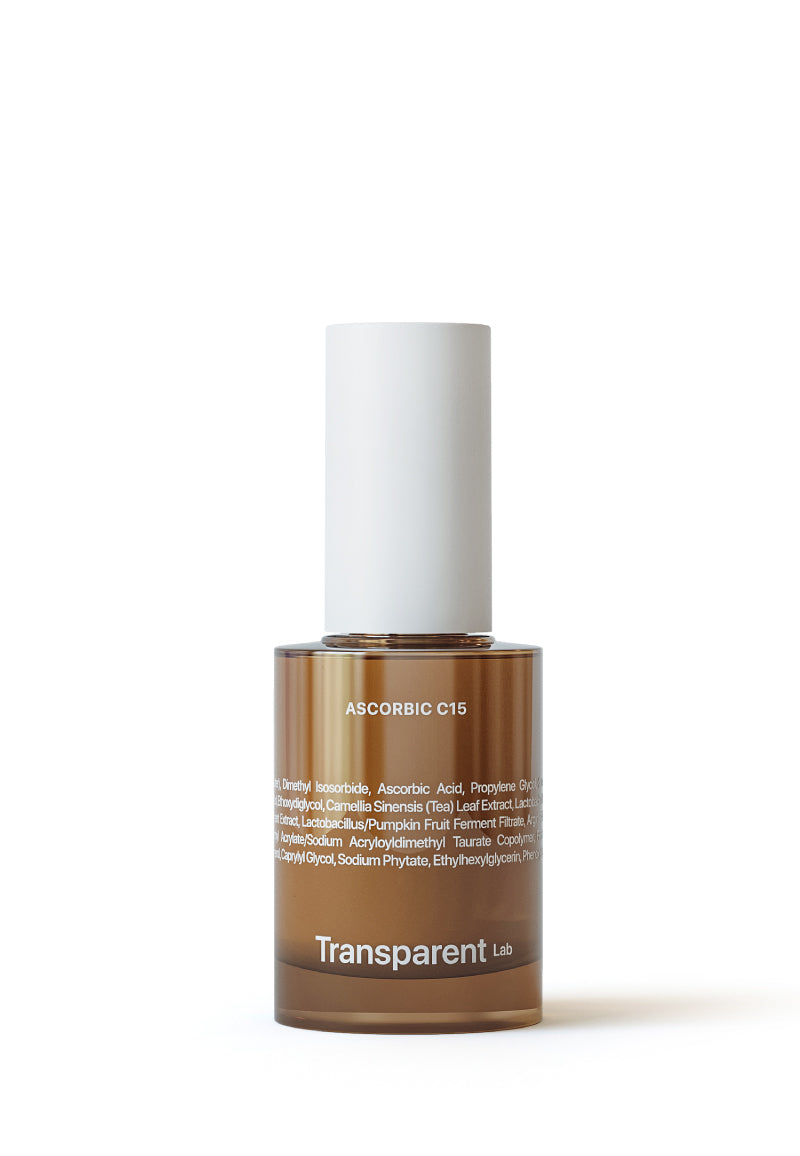
For non-sensitive skin that is accustomed to active skincare.
This serum contains 15% pure L-ascorbic acid, complemented by glutathione, green tea, vitamin E, and ferulic acid. The formula is designed to enhance radiance, even out skin tone, and reduce the appearance of pigmentation and post-acne marks.
The serum has an acidic pH of 3–3.2. It may irritate sensitive skin, so we recommend choosing a different product for this skin type. Ascorbic C15 is worth considering if your skin is not prone to reactivity and already tolerates active skincare well.
How to use: Apply a few drops in the morning after cleansing, followed by moisturizer if needed and sunscreen. To introduce it cautiously, apply it to dry skin and start with a few uses per week. Increase the frequency only if your skin feels comfortable.
Keep the rest of your routine simple at first: cleansing, moisturizing, and SPF. It is better to use exfoliating acids at another time, making it easier to monitor how your skin responds.
Transparent Lab Super C Serum
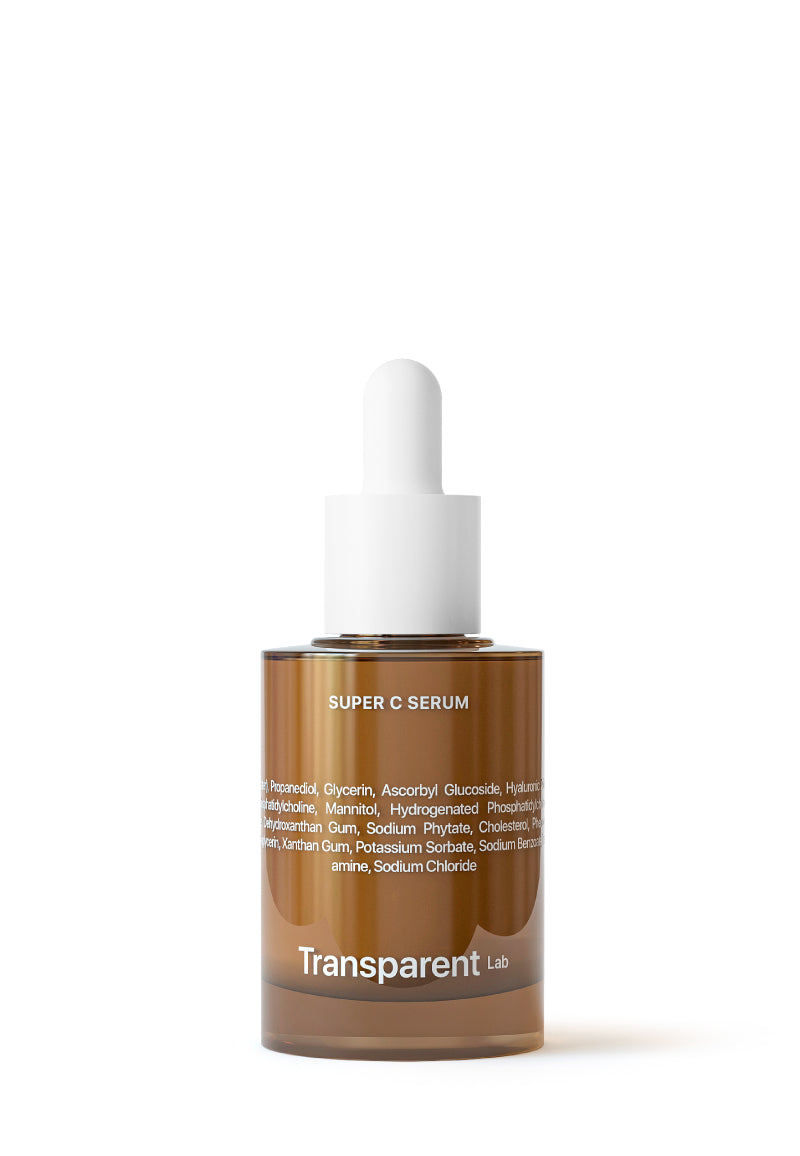
For those who want to combine vitamin C with hydration.
This serum uses Ascorbyl Glucoside, a stable vitamin C derivative. It also contains hyaluronic acid, glycerin, and ellagic acid. This combination is intended for dull skin, uneven skin tone, and insufficient hydration.
Super C may suit different skin types, including sensitive skin. If an acidic ascorbic acid serum causes discomfort, this formula may be an alternative. Individual skin reactions still need to be considered.
How to use: Apply a few drops after cleansing, then follow with moisturizer. The serum can be used in your morning or evening routine. In the morning, finish with sunscreen.
When trying Super C for the first time, use it as part of your usual basic routine. This makes it easier to tell how comfortable your skin feels with the new product.
Transparent Lab A5 Balancing Toner
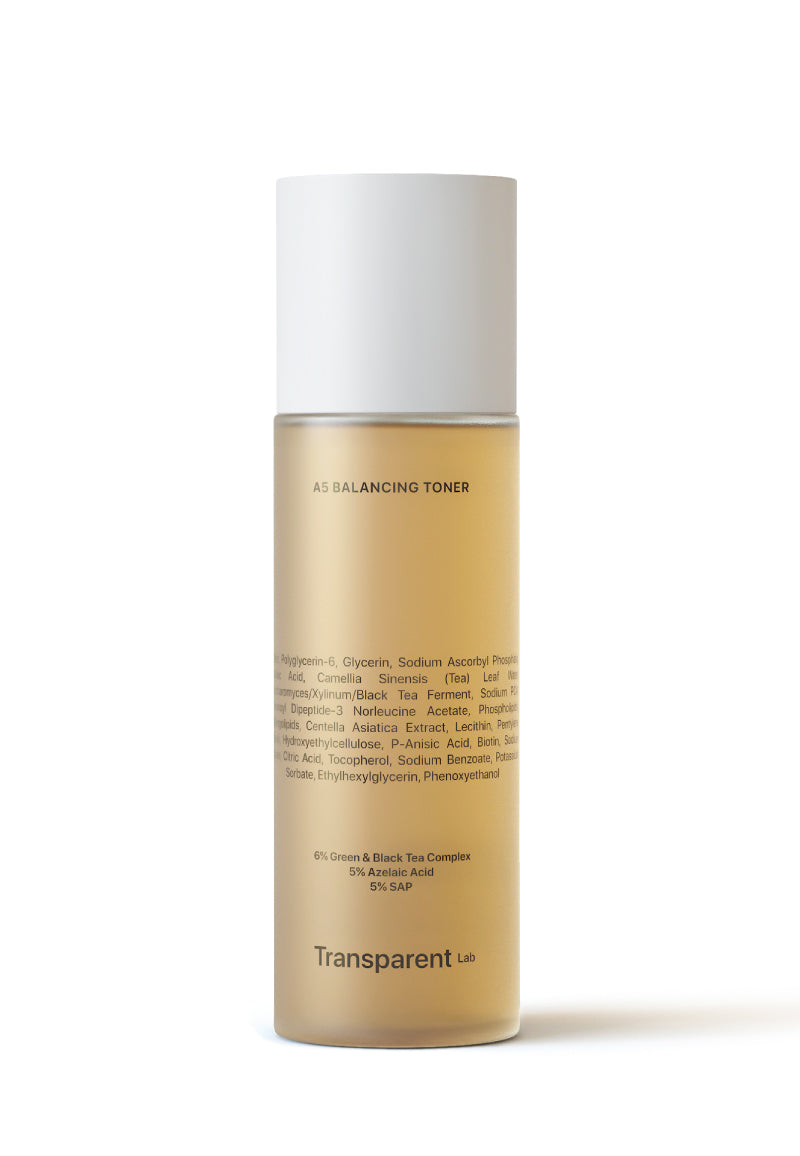
For skin with uneven tone, redness, and a tendency toward blemishes.
A5 Balancing Toner combines 5% Sodium Ascorbyl Phosphate (SAP), a stable vitamin C derivative, with 5% azelaic acid.
The formula also includes a green and black tea complex, centella, the moisturizing ingredient Sodium PCA, and the peptide Hexanoyl Dipeptide-3 Norleucine Acetate, which has a gentle skin-renewing action. This means A5 should be treated as a full-fledged active step in your routine, despite being a toner.
It is worth considering if dullness, uneven skin tone, and blemishes are concerns at the same time.
How to use: Shake the bottle and apply a small amount to clean, dry skin with a cotton pad, avoiding the eye area. Do not rinse. Follow with moisturizer and, in the morning, sunscreen.
To introduce it cautiously, start with a few applications per week. While assessing your skin’s response, avoid using peels or other intensive exfoliating products in the same routine.
Theramid Tetramid C.E.F
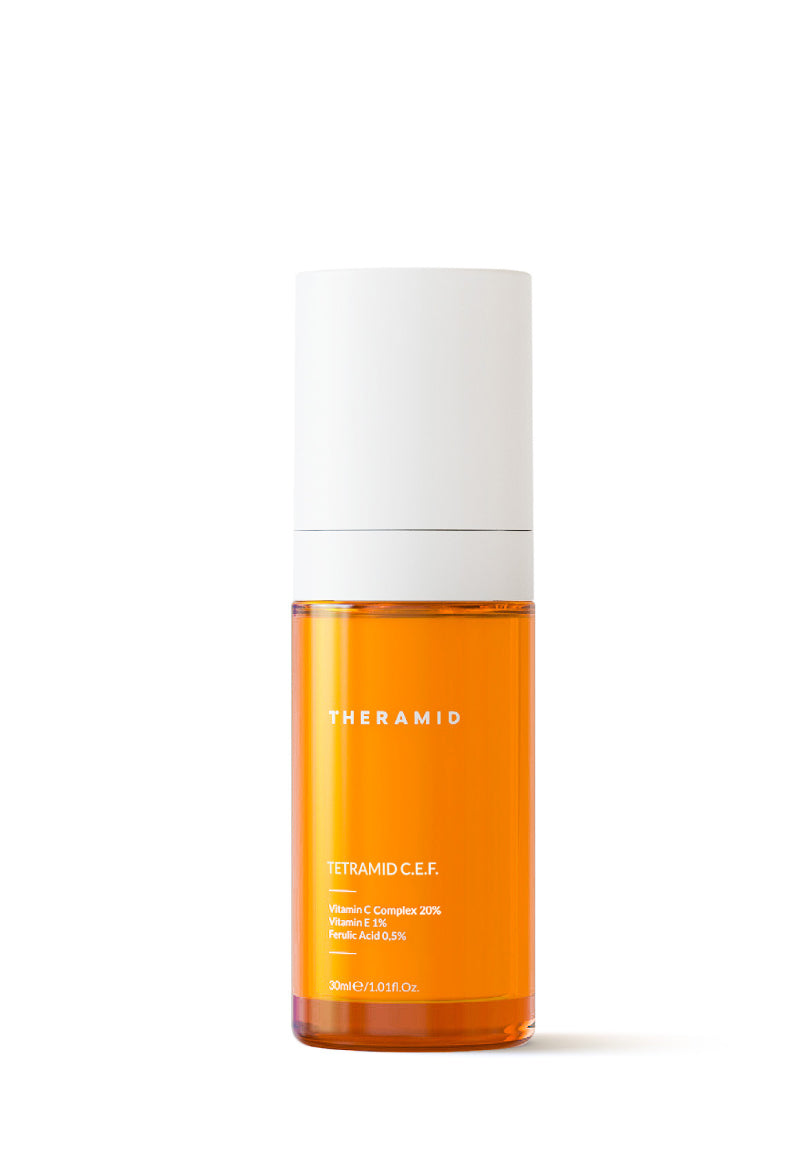
For dullness, uneven skin tone, and signs of photoaging.
Ascorbyl Tetraisopalmitate, Ascorbyl Glucoside, and Ascorbyl Methylsilanol Pectinate.
The product contains a 20% vitamin C complex, including 10% of the oil-soluble form Ascorbyl Tetraisopalmitate. It is complemented by 1% vitamin E and 0.5% ferulic acid.
Tetramid C.E.F is worth considering if you want to add an antioxidant complex to your routine and address radiance and skin tone evenness. It is also an option for exploring vitamin C derivatives instead of pure ascorbic acid. The serum contains moisturizing ingredients as well, so people with oily or combination skin may use it on its own without adding a moisturizer.
How to use: Apply a small amount to cleansed skin before moisturizer. You can use it in the morning or evening. If applying it in the morning, finish with sunscreen.
Start with once-daily use, or less often if your skin reacts easily to new products. Do not apply to irritated or damaged skin.
COSRX One Step Original Tone Clarifying Moisture Pad
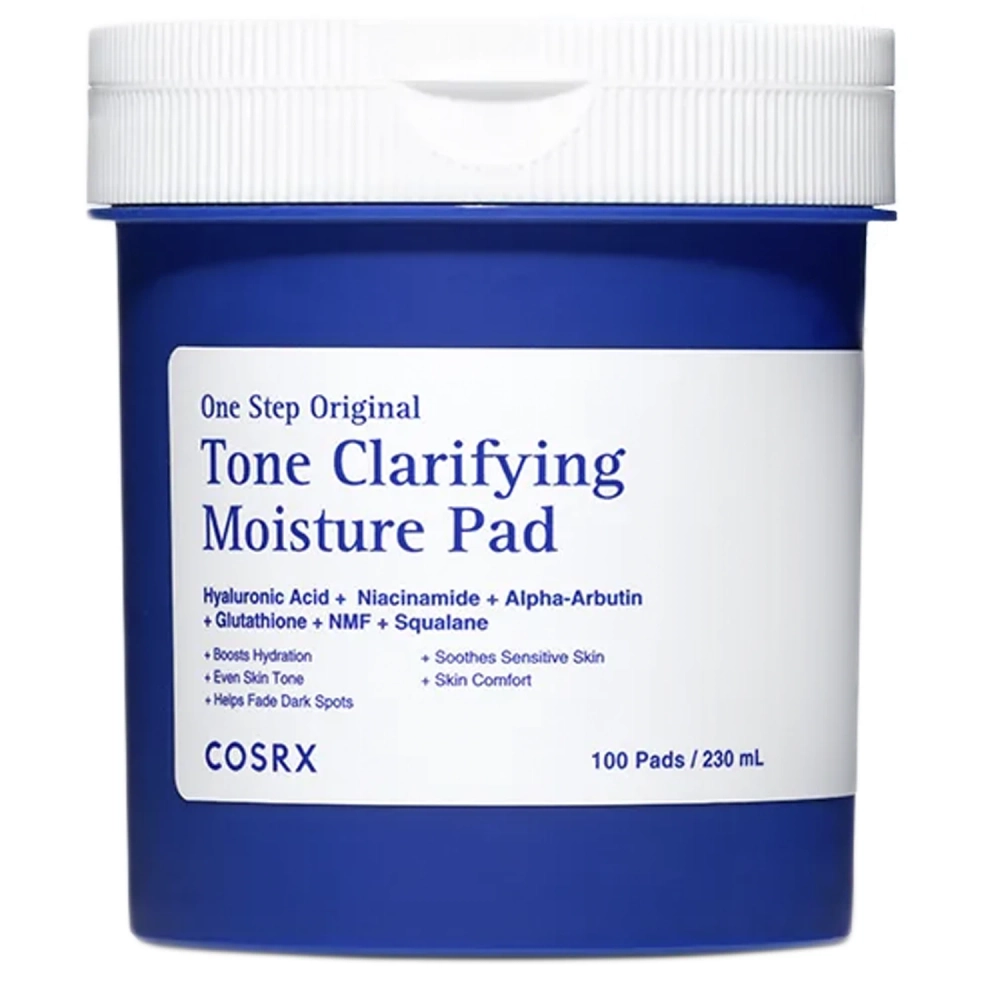
For dehydrated, dull skin in need of a convenient moisturizing step.
These pads contain 3-O-Ethyl Ascorbic Acid, a vitamin C derivative. Its concentration is not disclosed, so the pads should not be compared with concentrated serums in terms of potency.
The essence contains 69% rice water, niacinamide, alpha-arbutin, glutathione, a hyaluronic acid complex, panthenol, and allantoin. It also contains gluconolactone, a PHA that helps gently renew the skin.
These pads are worth considering for dryness, dehydration, dullness, and uneven skin tone. Here, vitamin C is one part of a multi-ingredient moisturizing formula.
How to use: After cleansing, gently sweep a pad over the skin, avoiding the eye area. You can leave it on specific areas for a few minutes as a mini mask, then gently pat in the remaining essence and continue your routine.
If you have sensitive skin, do not rub it or try to intensify the effect by repeatedly sweeping the pad over the same area.
What Can You Combine with Vitamin C?
With niacinamide — yes. There is no general rule against combining them. For example, the COSRX pads already contain niacinamide and a vitamin C derivative in the same formula. If separate products are well tolerated together, there is no need to use them at different times. However, the acidic form of vitamin C (ascorbic acid) should not be combined with niacinamide. The product’s low pH can convert niacinamide into nicotinic acid, negating its therapeutic effect and increasing the risk of redness.
With peptides — also yes, but consider the specific product. Most peptides are compatible with vitamin C. For copper peptides and products with particular restrictions, check the instructions. The rule that “no form of vitamin C can be used with any peptides” is too categorical. Stable forms of vitamin C are also preferable for these combinations.
With exfoliating acids — use caution. This combination is not categorically prohibited, but using several active products at once may be uncomfortable for the skin. To begin with, we recommend separating them: for example, vitamin C in the morning and acids on a different evening. This is especially important with an acidic ascorbic acid serum or sensitive skin.
Introduce new active products one at a time. This makes it easier to identify what works for your skin and what causes discomfort.
How to Choose the Right Vitamin C Product
If your skin is not sensitive and is already accustomed to active skincare, consider Ascorbic C15. If you want to combine a vitamin C derivative with hydration, try Super C Serum.
For uneven skin tone and a tendency toward blemishes, consider A5 Balancing Toner with SAP and azelaic acid. For comprehensive antioxidant care, there is Tetramid C.E.F; for a moisturizing step with added tone-evening care, there are the COSRX pads.
Vitamin C does not have to be the most concentrated product on the shelf. Choose a format that meets your skin’s needs and fits easily into your day. Skincare should be easy to understand and comfortable to use.